More Than Bourbon: 3 Incredible Stories of Distilleries Stepping Up When Communities Needed Them Most
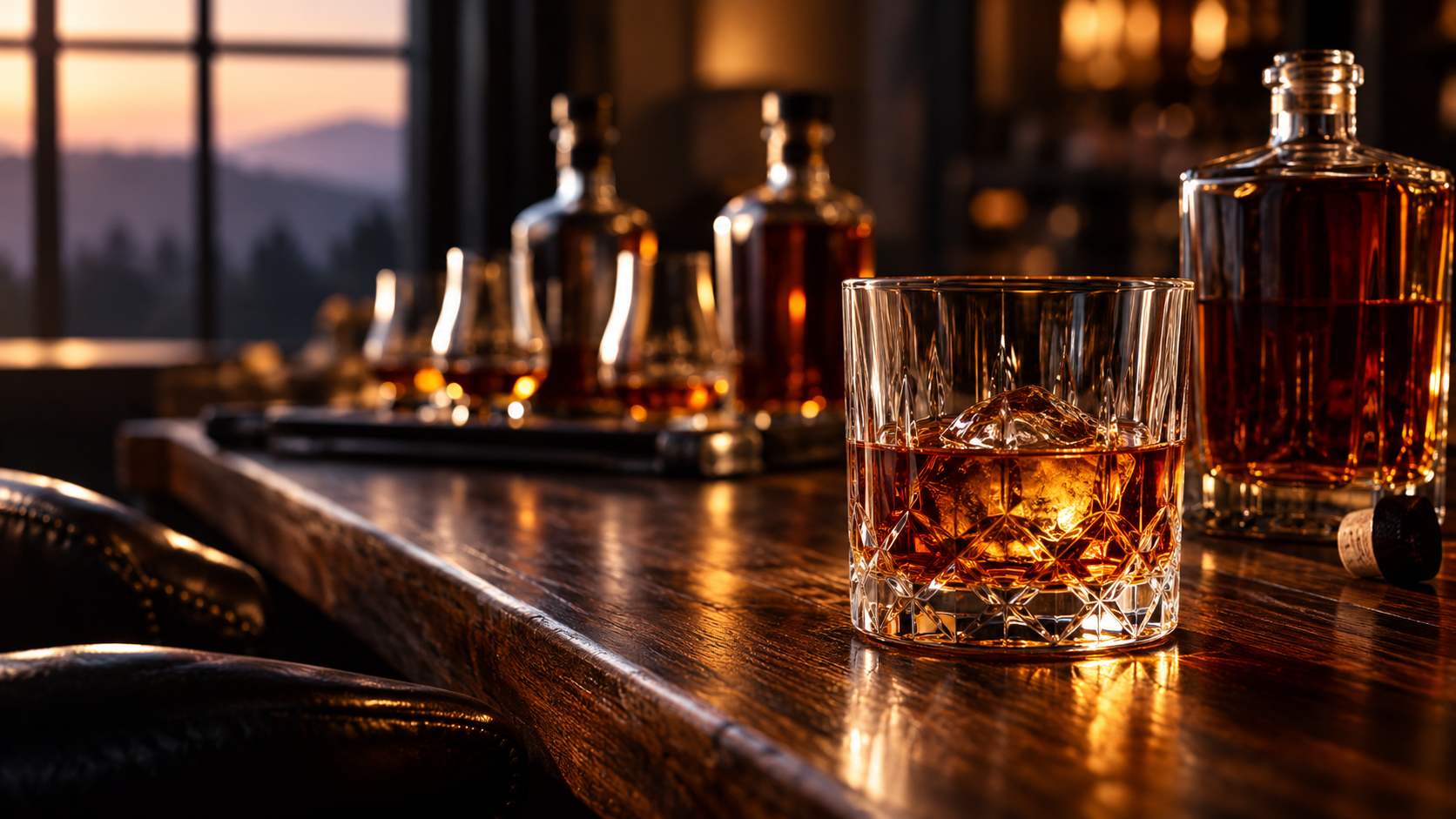
Bourbon is known for its rich history, craftsmanship, and tradition. But some of the most remarkable stories in the whiskey industry have nothing to do with what's inside the bottle. They are about people, communities, and what happens when distilleries put their resources to work during times of crisis.
When most people think about Kentucky bourbon, they picture aging warehouses, charred oak barrels, and generations of distilling knowledge passed down through families. It's an industry built on tradition, with brands that have become household names and enthusiasts who travel across the country to experience the places where their favorite whiskey is made.
But there's another side to bourbon that doesn't always get the same attention. Behind the labels and limited releases are businesses deeply connected to the communities around them. Many employ generations of local families, support nearby businesses, and have become part of the identity of the towns they call home.
When disaster strikes, those relationships become especially important.
Over the years, bourbon distilleries have used their facilities, employees, products, and financial resources to help people facing extraordinary challenges. From devastating floods to a global pandemic, the industry's response has demonstrated that making great whiskey is only part of its story.
Here are three examples that deserve to be remembered.
1. When Eastern Kentucky Flooded, the Bourbon Industry Showed Up
In July 2022, catastrophic flooding swept through Eastern Kentucky after record rainfall overwhelmed rivers and creeks. Entire neighborhoods were submerged, roads and bridges were destroyed, and families were forced to flee their homes. The disaster claimed dozens of lives and left communities facing an enormous recovery.
For an industry with deep roots across Kentucky, the devastation was personal. Some distillery employees had relatives directly affected by the flooding, and the damage extended across communities that had supported the bourbon industry for generations.
The response began almost immediately.
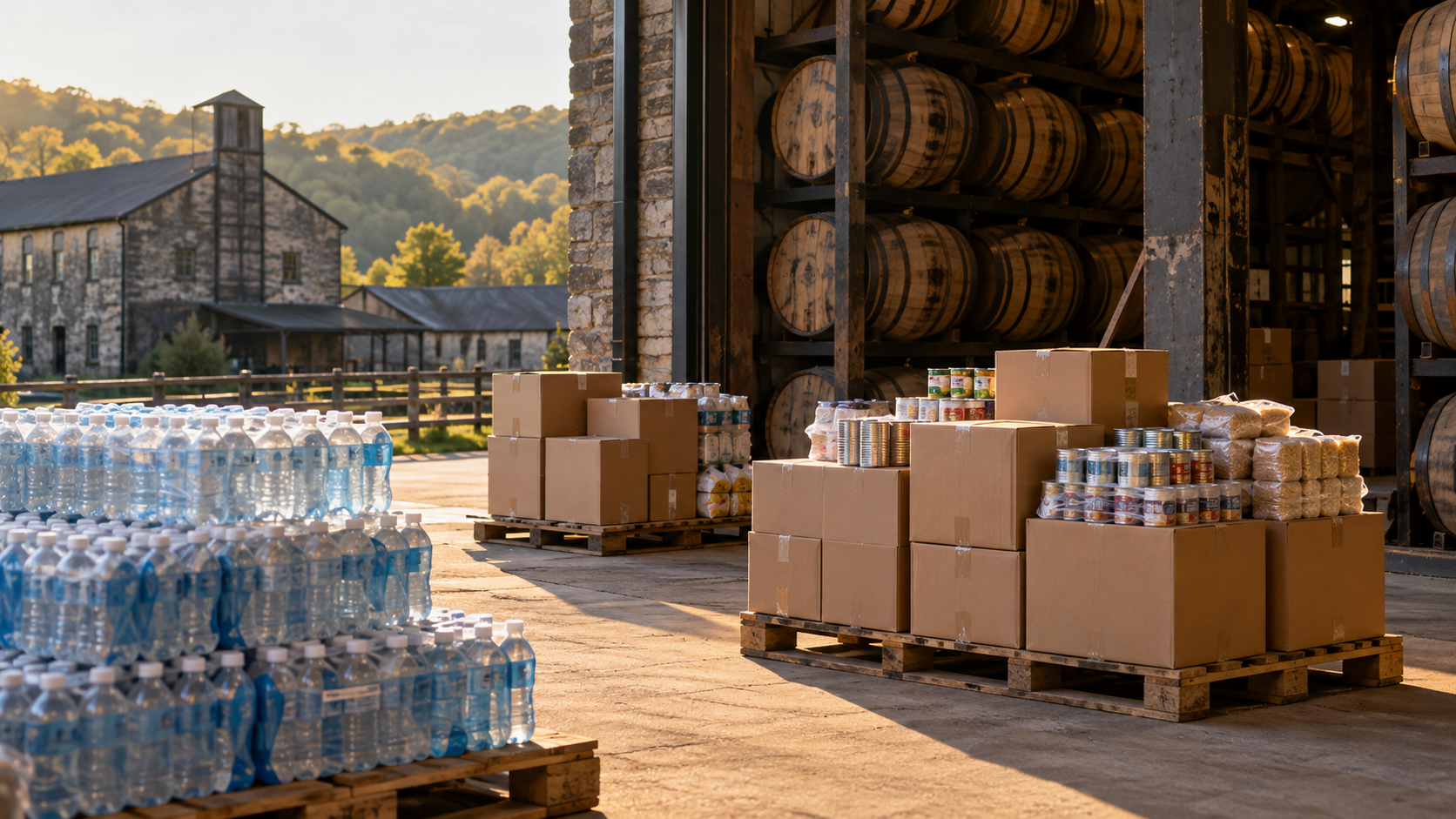
Members of the Kentucky Distillers' Association started sending fresh drinking water to affected areas, using everything from bottled water to large containers and tankers. Distilleries also organized supply drives and committed money to emergency relief efforts, recognizing that families needed immediate assistance with basic necessities.
Major bourbon producers joined the effort. Brown-Forman contributed $100,000, while Beam Suntory, Four Roses, and Campari, the parent company of Wild Turkey, each contributed $50,000.
But the industry's response didn't stop with traditional donations.
The Kentucky Distillers' Association partnered with the Bourbon Crusaders charitable organization and whiskey expert Fred Minnick to organize the Kentucky Bourbon Benefit, an auction featuring rare bottles, private barrel selections, and exclusive distillery experiences.
The results were extraordinary.
The auction raised more than $1.4 million for Eastern Kentucky flood relief. Thousands of bourbon enthusiasts from all 50 states participated, placing more than 17,000 bids on donated whiskey and experiences.
Reflecting on the industry's response, Kentucky Distillers' Association President Eric Gregory explained:
"As a signature industry, it's our duty to go above and beyond and give back, especially in times of need."
Source: Kentucky Distillers' Association, August 24, 2022
What made the effort especially powerful was how the industry turned something collectors already valued into meaningful assistance for families who had lost so much.
Rare bourbon wasn't simply being bought and sold. It was helping communities begin the difficult process of rebuilding.
And for an industry sometimes criticized for the high prices attached to its most desirable bottles, this was an example of collector enthusiasm being put to a much greater purpose.
2. When Hospitals Ran Short on Sanitizer, Wilderness Trail Changed What It Made
In March 2020, as COVID-19 spread across the United States, hospitals, nursing homes, and emergency responders faced a growing problem. Hand sanitizer was becoming increasingly difficult to obtain just as demand was skyrocketing.
For most businesses, the pandemic created an unprecedented operational challenge. For distilleries, however, there was an unusual opportunity to help.
Producing bourbon requires expertise in working with alcohol, along with specialized equipment and production capabilities. With the right adjustments, some of those same resources could be used to manufacture desperately needed hand sanitizer.
Wilderness Trail Distillery in Danville, Kentucky, was among the distilleries that stepped forward.
Rather than focusing exclusively on producing whiskey, the company began using its ethanol alcohol to manufacture hand sanitizer for local healthcare providers. Its initial plans called for producing approximately 500 gallons per week over six to seven weeks, with supplies intended for Ephraim McDowell Regional Medical Center and other organizations serving the community.
The effort wasn't designed to create a new consumer product. The distillery was providing sanitizer free of charge to area hospitals, nursing homes, and first responders.
Shane Baker, Wilderness Trail's master distiller and co-owner, explained the thinking behind the effort:
"Our goal is to take care of the healthcare providers."
He also made clear that the distillery was willing to continue production beyond its initial plans if necessary.
Source: Kentucky Distillers' Association, March 21, 2020
Wilderness Trail wasn't alone. Across Kentucky, distilleries including Buffalo Trace, Woodford Reserve, Old Forester, and others adapted operations to help address the shortage.
It was an extraordinary moment for an industry known for taking years to produce its signature products. While bourbon might spend a decade aging in an oak barrel, these distilleries needed to respond to an emergency in a matter of days.
The contrast is part of what makes the story so compelling.
An industry built around patience and tradition demonstrated that it could also be remarkably resourceful when circumstances demanded it.
For healthcare workers struggling to obtain essential supplies, the bourbon industry's willingness to adapt provided something far more important than another bottle on the shelf.
3. After Deadly Tornadoes, Bourbon Collectors Helped Rebuild Western Kentucky
On December 10 and 11, 2021, a devastating tornado outbreak tore through Western Kentucky, destroying homes, businesses, and entire sections of communities. Mayfield, Kentucky, was among the hardest-hit areas, with widespread destruction that left families grieving and facing an uncertain future.
The bourbon industry's response was immediate and substantial.
Beam Suntory and its parent company, Suntory Holdings, pledged $1 million to support recovery, dividing the contribution between the Team Western Kentucky Tornado Relief Fund and the American Red Cross. Other major producers, including Angel's Envy, Brown-Forman, Four Roses, Heaven Hill, Michter's, Rabbit Hole, and Wild Turkey, also contributed to the relief effort.
The Kentucky Distillers' Association, Bourbon Crusaders, and Fred Minnick organized another Kentucky Bourbon Benefit, bringing together distilleries, collectors, retailers, and whiskey enthusiasts for a six-day charity auction.
The event featured rare and vintage bottles, exclusive private barrel opportunities, and unique bourbon experiences that collectors would normally have little chance of purchasing.
But one of the most memorable contributions came from a family that had lost its own business.
Carr's Steakhouse in downtown Mayfield was destroyed by the tornado. While searching through the wreckage, the owners recovered 14 bottles of premium bourbon that had somehow survived the devastation. Rather than keeping the bottles, the family donated them to the charity auction to raise money for others affected by the storm.
The bottles included selections from Maker's Mark, Russell's Reserve, Angel's Envy, and other well-known brands. Each represented a small piece of what the family had managed to salvage from a place that was no longer standing.
Restaurant owner Daniel Carr described the destruction that occurred after he warned his family and employees to evacuate:
"It was just a pile of bricks and wood less than 10 minutes later."
Source: Kentucky Distillers' Association, December 20, 2021
Remarkably, everyone inside the restaurant escaped safely. The following day, the family searched through the wreckage for the restaurant's cash drawer so they could pay their 29 employees, many of whom had also lost homes or possessions.
Their decision to donate the surviving bourbon bottles, even while facing their own loss, captured something remarkable about the community's response.
The Kentucky Bourbon Benefit ultimately raised approximately $3.4 million, and when combined with additional distillery contributions, the industry's total reported impact approached $5 million.
Source: Kentucky Distillers' Association, December 2021
The money was significant, but the larger story was about people helping people. Distilleries provided financial support, collectors put their money toward relief, and even families who had lost nearly everything found ways to contribute.
It's difficult to imagine a stronger example of the connection between bourbon and the communities where it is made.
Bourbon Has Always Been About More Than Whiskey
It's easy to get caught up in the excitement surrounding bourbon. There are new releases to discover, distilleries to visit, bottles to collect, and endless debates about which whiskey deserves a place at the top of the rankings.
But stories like these offer an important reminder that the bourbon industry is much bigger than any individual brand or bottle.
When Eastern Kentucky flooded, distilleries delivered water and helped raise money for families who had lost their homes. When a global pandemic created shortages of essential medical supplies, whiskey makers adapted their operations to support healthcare workers. And when tornadoes devastated Western Kentucky, distilleries and collectors came together to raise millions for recovery.
These weren't simply marketing campaigns or symbolic gestures. They represented meaningful commitments of time, money, equipment, and resources during some of the most difficult moments these communities had experienced.
Perhaps that's what makes bourbon culture so special. It's not only about appreciating the craftsmanship behind a great whiskey. It's also about the people who make it, the communities that support it, and the relationships that develop around a shared passion.
At ProofPoint, we love helping people discover, compare, and rank incredible bourbons. But we also believe the stories behind those bottles deserve to be shared.
Because sometimes the most impressive thing about a distillery has nothing to do with how its bourbon tastes.
Sometimes it's what the people behind that bourbon do when others need them most.
Discover more bourbon stories and find your next favorite pour at ProofPoint.
Comments (0)
Please log in to leave a comment.
No comments yet. Be the first to comment!