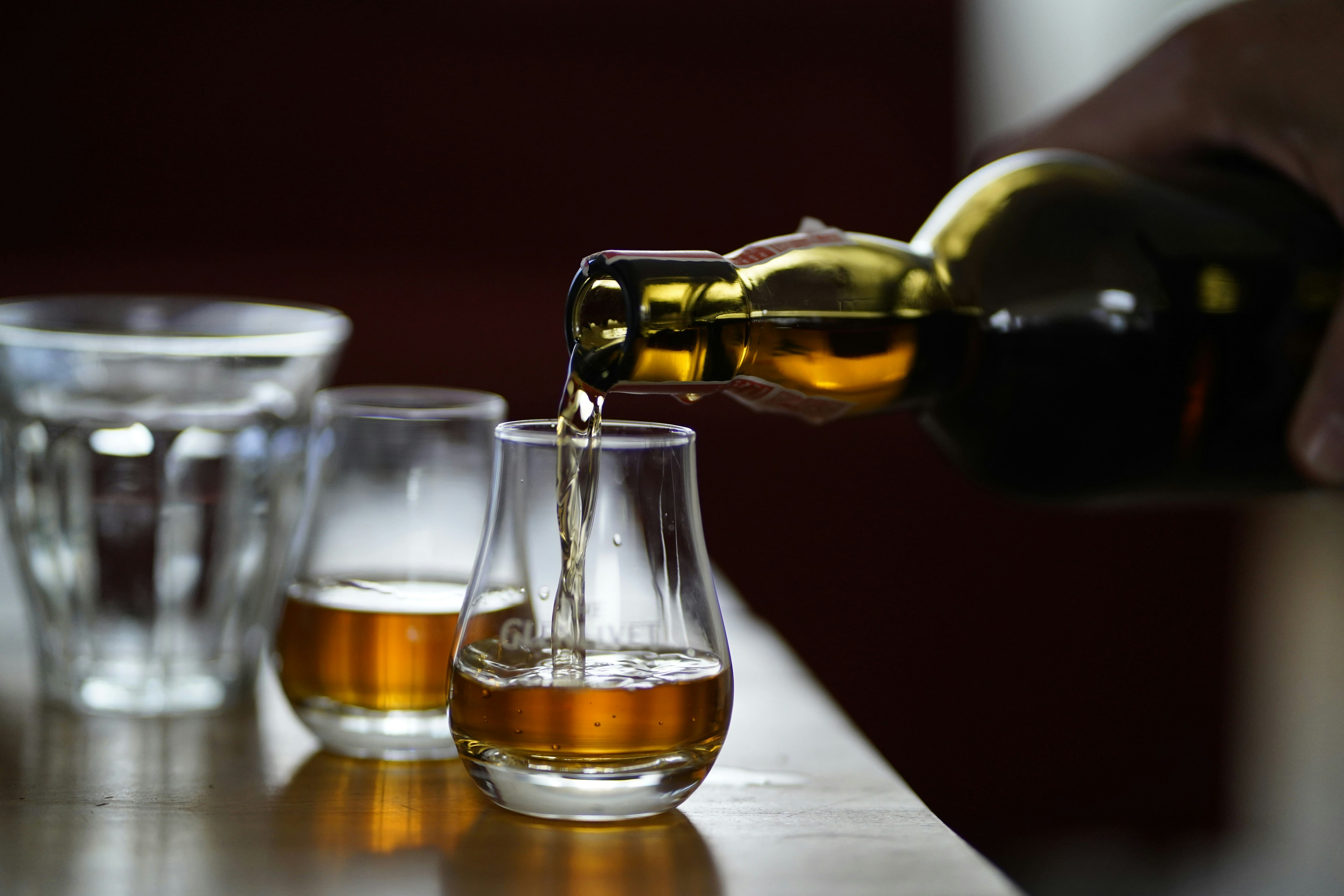
Whiskey vs. Whisky: What’s the Difference—and Does It Really Matter?
Whiskey vs. Whisky: What’s the Difference—and Does It Really Matter?
If you’ve ever stood in the liquor store staring at bottles and wondered why some say whiskey while others say whisky, you’re not alone. It feels like one of those things you’re supposed to know, yet no one ever explains it in plain English. The truth is, the difference is much simpler than it sounds—and it has more to do with where it’s made than what it is.
At the most basic level, whiskey and whisky are the same spirit. Both are distilled from grain, aged in barrels, and meant to be enjoyed slowly. The spelling difference comes down to geography. In general, the United States and Ireland spell it “whiskey” with an “e,” while Scotland, Canada, Japan, and most of the rest of the world spell it “whisky” without one. That’s the easiest rule to remember, and it works almost every time.
This split goes back to the 1800s. Irish distillers wanted to differentiate their product from Scotch, which at the time had a rougher reputation in certain markets. Adding the “e” was a simple way to signal that their whiskey was something different. American distillers, many of whom had Irish roots, adopted the same spelling. Scotland, on the other hand, saw no reason to change what they were already doing—and they never did. Over time, those choices became standard.
What’s important to know is that the spelling itself doesn’t tell you anything about flavor. A bold Kentucky bourbon and a smoky Scotch taste worlds apart, but that’s because of differences in ingredients, production methods, aging requirements, and climate—not because one has an extra vowel. Corn-heavy bourbons, barley-based Scotches, rye-forward whiskeys, and smoother Irish styles all fall under the same broad category.
There are a few exceptions, of course. Some American brands—most famously Maker’s Mark—drop the “e” entirely as a nod to family heritage. It’s intentional, not a mistake.
At the end of the day, the whiskey vs. whisky debate sounds more complicated than it really is. The spelling tells you where it came from, not whether it’s better. What matters far more is what’s in the glass, how it tastes to you, and who you’re sharing it with. Everything else is just letters on a label.
The Proof Point
If it’s from the U.S. or Ireland, expect an “e.” If it’s from Scotland, Canada, or Japan, don’t. Either way, the spelling doesn’t define quality—the flavor does. 🥃
Comments (0)
Please log in to leave a comment.
No comments yet. Be the first to comment!
Related Posts
The Top 5 Biggest Bourbon Myths - Debunked
Older, pricier, and higher-proof doesn’t always mean better. We break down the five biggest bourbon myths—and what actually matters.
Bottled in Bond: Why This Old-School Whiskey Rule Still Matters
If you’ve spent more than five minutes browsing bourbon, you’ve probably seen the phrase “Bottled in Bond” slapped on a label and thought one of three things: 1. Sounds fancy 2. Sounds old 3....

How to Read a Bourbon Label (Without Googling Every Word)
Bourbon labels can be confusing fast. Learn how to read proof, age statements, and common terms so you can pick the right bottle without guessing.